library
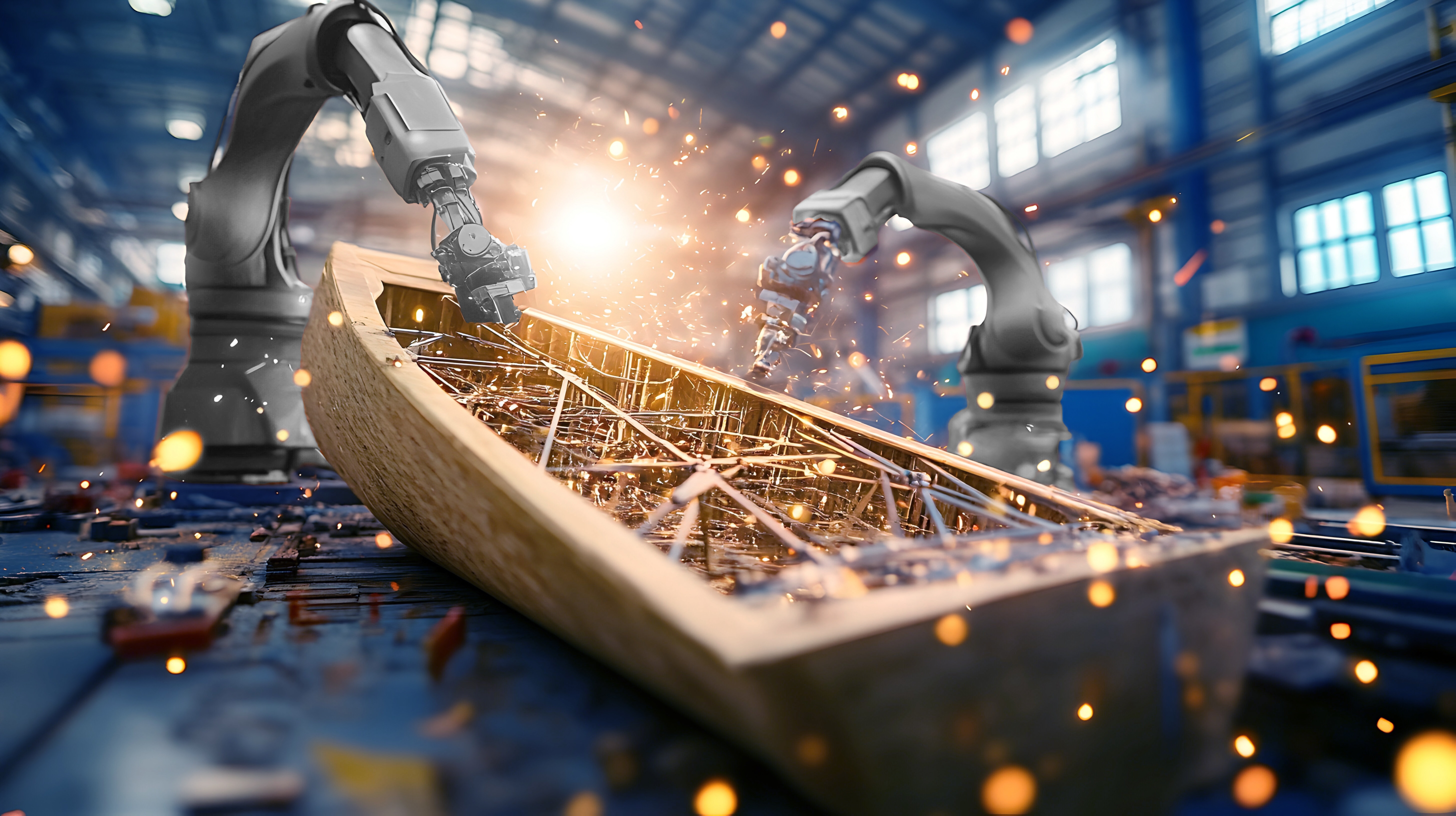
As a key pillar of strategic industrialization, trusted manufacturing ensures that the United States can rapidly design and reliably build systems when it needs them. This capability is increasingly vital for national security as the United States faces great power rivals with vast manufacturing capacity, the possibility of conflict in a contested logistics environment, and increased competition to remain an innovation leader. However, reshoring this capability requires the use of agile, software-driven methods to address the complexities of modern manufacturing and the rapidly shifting battlefield requirements of tomorrow.
A Global View — Why Trusted Manufacturing Matters Now
At the strategic level, the United States is grappling with a highly complex manufacturing ecosystem. Decades of offshoring have made finding and retaining skilled labor challenging and weakened our domestic manufacturing infrastructure. Despite having a robust innovation network, the United States must compete with countries that have benefitted from decades of inexpensive labor and that have made significant investments in automation, allowing them to expand production capacity and speed. One stark example of this is in the maritime manufacturing capacity of the United States compared with China. In 2024 alone, China produced more commercial vessels by tonnage than the United States has since World War II, according to a report from the Center for Strategic and International Studies.
Delivering an Asymmetric Advantage
At the operational and tactical levels, wide-spread implementation of asymmetric tactics by state actors are imposing new demands on warfighters. As conflicts in Ukraine and the Middle East have demonstrated, militaries must be able to rapidly produce a large number of low-cost systems and be able to quickly adapt them to changing battlefield demands. Moreover, Ukrainian forces have illustrated the value in agile, distributed production networks that can be effective in a contested logistics environment where adversaries create disruptions at multiple links in the supply chain. Russia’s ongoing sabotage attacks against European nations are only a preview of the challenges the United States could face in a future great power conflict.
At IQT, we are investing in startups with the potential to have an outsized impact on America’s trusted manufacturing capacity, from the strategic initiatives like shipbuilding to tactical challenges like supplying drones on the battlefield. Not only can these technologies bolster the United States’ manufacturing capacity, but they can also accelerate our pace of innovation.
AI-Powered Production: Accelerating Innovation Through Smart Software
AI-enabled manufacturing software can help designers move faster and create higher performance mission-critical products, ranging from airframes to heat exchangers and more. Rather than relying on legacy software, commercial startups are developing products that use AI to incorporate engineering principles and enhance manufacturing workflows through design improvements, machine toolpath optimizations, and real-time quality control tools.
For example, IQT portfolio company nTop created a platform that saves users valuable time and resources by allowing them to digitally explore design variants that incorporate manufacturing constraints, performance requirements, and existing tools such as finite element analysis (FEA).
Another IQT portfolio company, CloudNC, is focused on reducing the time and labor required to translate digital parts files to machine instructions. This enables both commercial engineers and those supporting warfighters to convert digital blueprints to physical parts in record time.
Innovative hardware systems that incorporate AI also have a role to play in developing trusted manufacturing. Industrial robotics, which historically have proven excellent for high-volume/low-mix applications, can be supplemented with novel software to increase agility and usability. This can open the door for robotics to augment the domestic workforce, even in previously unavailable high-mix applications.
The Importance of Deployable Hardware for Mission-Critical Manufacturing
Alongside expanding domestic manufacturing capabilities, the United States must also invest in field-deployable systems that enable on-site production — eliminating delays due to transportation and allowing for rapid design adjustments to meet evolving mission needs. These systems are already being developed by innovative companies that are reimagining how and where production can happen. For example:
- The X7 Field Edition by Markforged is a rugged 3D printer for tactical response to supply challenges in remote locations.
- The xCell, developed by Firestorm, is a semi-automated manufacturing system that offers on-demand production of full drone platforms or system subcomponents.
These types of field-deployable platforms can offer real-time repairs or spares, empowering operators to continue missions during times of logistical crisis, as well as accelerate innovation cycles.
The Potential of Engineering Biology & Autonomous Labs
Looking further out on the technology horizon, advancements in AI and engineering biology could accelerate innovation and shorten development times. America’s hard-fought advantage in cutting-edge biotechnologies may be at risk given Chinese progress in the field, but fully autonomous laboratories, known as Self-Driving Laboratories (SDLs), may be the next arena for global competition in life and physical sciences.
Several SDL companies are striving to “close-the-loop” by integrating specialized robotic systems, with frontier AI models to design scientific experiments and conduct them autonomously. IQT portfolio company, Lila Sciences, is pursuing such capabilities to accelerate discovery of both novel materials and therapeutics. The development of SDLs is being propelled by emerging science-focused AI foundation models and new physical AI tools that are bridging the digital-physical divide.
Advances in the foundational sciences alongside automation, AI, and compute, have also led to an inflection point in engineering biology. Researchers can now create products in the lab that were previously impossible — from materials and chemicals to medicines and foods. While biomanufacturing has been leveraged for thousands of years — such as using living organisms, or “cell factories,” to transform sugar into alcohol for beer and wine — what’s different today is our ability to engineer biology and expand its capabilities. Portfolio company, Antheia (recently featured on The IQT Podcast), is leveraging microbial synthesis to onshore the manufacturing of key starting materials and active pharmaceutical ingredients for essential medicines. Another IQT portfolio company, Prolific Machines, is developing advanced mammalian cell-based protein and antibody production platforms for biotherapeutics. The company’s platform uses engineered cells, which are programmed to respond to light, combined with illuminated bioreactors to easily switch biochemical reactions on and off.
Innovation for an Industrial Advantage
In a world defined by rapid change and rising geopolitical risk, the United States needs to be creative about how to bolster domestic manufacturing resilience. Building resilience requires more than policy — it demands bold action. By scaling the adoption of ready-now technologies and strategically investing in potentially game-changing breakthroughs, the United States can get closer to reclaiming its industrial edge.